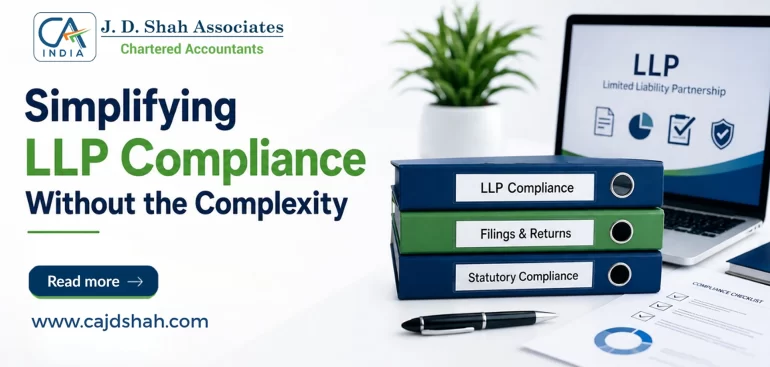
Running an LLP is supposed to be the easier route. Fewer compliance hurdles than a private limited company, less paperwork, more flexibility to just get on with the business. And for the most part, that holds true. But “lighter compliance” doesn’t mean “no compliance,” and that’s the gap where a lot of LLPs run into trouble. At JD Shah Associates, a chartered accountant firm in Mumbai, we work with a lot of partnership firms and LLPs on exactly this, keeping things compliant without turning it into a full time job. Here’s what actually matters and what you can safely ignore.
Why LLP Compliance Feels Heavier Than It Should
We talk to a lot of LLP owners at JD Shah Associates, and honestly, the same conversation comes up again and again. Someone started an LLP since the process appeared much simpler compared to private limited company. They didn’t have to do as much paperwork, attend as many board meetings, or deal with as much compliance as they would for a private limited company. Of course, this advantage remains mostly true. However, after a year or maybe even two of operating the business, these entrepreneurs receive a notice through the post or they miss a filing deadline, or they simply realize that the deed of partnership that they are relying on was not really keeping a track of what they, the partners, were doing all those times. And suddenly, LLP doesn’t appear quite so simple anymore after all.
Here’s the thing. LLP compliance really isn’t complicated. It’s just that nobody explains it in plain terms, so people either ignore it completely or overcorrect and start treating it like it’s as heavy as running a company. Neither works well.
The Basic Filings Every LLP Needs to Track
Let’s keep this practical. If you’re running an LLP, there are really only a handful of things you need to stay on top of every year.
Form 11 (Annual Return)
This is due by 30th May every year. It just tells the ROC who your partners are and what the LLP looks like right now. Doesn’t matter if your LLP did any business or not, this still needs to be filed.
Form 8 (Statement of Account & Solvency)
Due by 30th October. This one covers your financials, basically confirming the LLP can pay its debts and giving a snapshot of accounts.
Income Tax Return
LLPs file ITR-5. If your turnover crosses the audit threshold, a tax audit kicks in too, and that changes your filing deadline.
GST Returns (if registered)
If you’re registered under GST, the usual monthly or quarterly returns apply, same as any other business structure.
Books of Accounts
LLPs need to maintain proper accounts, and if turnover or contribution crosses certain limits, those accounts need to be audited.
That’s really the core list. Most LLPs that get into trouble aren’t dealing with something exotic. They just missed one of these, or filed late, or filed it without checking the numbers properly. A decent tax consultant in Mumbai can usually spot these gaps in an afternoon, well before they turn into a notice.

Where Most LLPs Actually Slip Up
Treating the LLP like it runs itself. Once it’s registered, some partners assume compliance is a once-a-year thing they’ll “handle later.” Form 11 and Form 8 have separate deadlines, and late filing brings a penalty that adds up daily. It’s not a huge amount per day, but it stacks up fast if left for months.
Not updating the LLP agreement. Partners join, partners leave, profit sharing changes, capital contribution changes. If none of this gets reflected in the agreement or filed with the ROC, you end up with a document that doesn’t match reality. That becomes a real problem the moment there’s a dispute or a bank wants to verify something.
Mixing up personal and LLP finances. This happens more than people admit. Partners routing personal expenses through the LLP account, or the other way around, makes the books messy and makes an audit far more painful than it needs to be.
Ignoring GST and TDS obligations. LLPs sometimes assume GST rules are for “bigger” businesses. If you’re registered, the return filing obligation is the same regardless of size. This is usually where having a GST consultant on hand actually pays for itself, catching mismatches before they show up as a mismatch notice. Same goes for TDS deduction and deposit if you’re paying salaries, rent, or professional fees above the threshold.
No one person owns compliance. In a lot of LLPs, especially the smaller ones, compliance falls into a gap between partners because everyone assumes someone else is tracking it. That’s usually how deadlines get missed.
A Simple Way to Stay on Top of It
You don’t need a complicated system for this. A few habits go a long way.
- Keep a simple calendar with the actual dates: Form 11, Form 8, ITR filing, GST returns, TDS deposits. Nothing fancy, just the dates written down somewhere you’ll actually check.
- Review your LLP agreement once a year and update it if anything’s changed, even something as small as a change in profit ratio.
- Keep your books current through the year instead of reconstructing them in March. It’s a lot less painful and a lot more accurate.
- Have one person, whether it’s a partner or your accountant, responsible for tracking filings. Shared responsibility often means no responsibility.
- Get your accounts reviewed periodically rather than waiting until the audit deadline is close.
None of this takes a lot of time if you build it into a routine. The LLPs that stay compliant without stress are usually the ones that treat these as small recurring tasks, not one big annual scramble.
Final Thoughts
LLP compliance was designed to be lighter than running a company, and it genuinely is, as long as you don’t let the small things pile up. Most of the trouble we see isn’t from complicated situations. It’s from missed deadlines, outdated agreements, and nobody really owning the process.

How JD Shah Associates Can Help
If you’d rather not track all of this yourself, that’s exactly what we help with. As an auditing firm and tax consultant working with LLPs and partnership firms across Mumbai, we handle the day to day compliance work that’s easy to put off but expensive to ignore. Our support usually covers:
- Form 11 and Form 8 filing with the ROC
- Income tax return filing (ITR-5) and tax audit, where applicable
- LLP agreement review and updates when partners or terms change
- GST registration and return filing
- Bookkeeping and accounting support through the year
- TDS compliance, deduction, and deposit
Most LLPs we work with tell us the same thing once this is set up properly: compliance just stops being something they have to think about. If you’re looking for a CA firm in Borivali, Mumbai that can take this off your plate, JD Shah Associates is happy to help you sort it out.