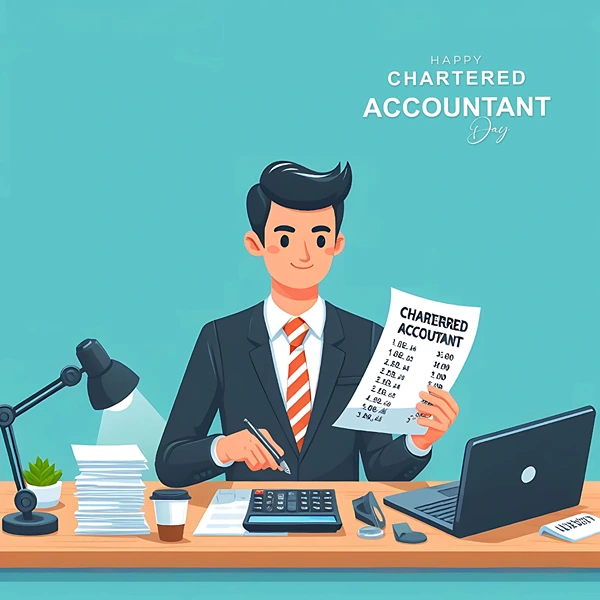
Every year on the 1st of July, the profession pauses for a day. CA Day marks the founding of ICAI back in 1949, and the institute is now decades deep into shaping how businesses in India operate. Usually it’s an occasion for reflection within the profession itself, CAs looking back at how far the institute has come. But we think it’s worth flipping that lens. Because the way the CA profession has changed isn’t just our story. It directly shapes how businesses like yours get supported, advised, and protected.
So instead of writing another “history of ICAI” piece, here’s what CA Day actually means for the businesses we work with every day.
The Role Has Moved Well Beyond the Balance Sheet
If you had asked someone in the 90s what a chartered accountant does, the answer would have been simple. Book keeping, tax filing, maybe an audit once a year. That’s still part of the job, and it always will be. But it’s a smaller part of it now.
Today, a CA firm is expected to sit in on decisions long before the numbers are finalised. Should you restructure before the next funding round? Is your GST setup ready for a multi state expansion? Does your business need to think about IND AS compliance because a lender or investor is asking for it? These aren’t questions you take to an accountant after the fact. They’re questions you bring in early, and that’s exactly where the profession has moved.

Compliance Is No Longer a Once-a-Year Event
Tax audits, GST returns, RERA filings, TDS, they used to run on their own separate calendars, each handled in its own little silo close to the deadline. That approach doesn’t hold up anymore. Regulators want more frequent reporting, faster reconciliation and cleaner digital trails. Notices come quicker too.
For a business, that means compliance can’t be an annual scramble. It has to be something that’s tracked through the year, quietly, in the background, so nothing surprises you in March. Firms that have kept pace with this shift are the ones who now build ongoing systems for their clients instead of just showing up before a due date.
Technology Changed the Job, Not the Judgement
A good chunk of what used to take a CA’s team hours, data entry, reconciliation, basic return preparation, is handled by software today. That’s a good thing. It frees up time for the parts of the job that actually need a trained professional: reading a scrutiny notice correctly, structuring a transaction, spotting a risk in a client’s books before it becomes a real problem.
For businesses, this shift means something practical. You’re no longer paying a CA firm mainly for data entry. You’re paying for judgement, for someone who can look at your numbers and tell you what they actually mean for your next move. That’s a better use of the relationship, honestly.
What This Means for the Businesses We Work With
1. Advisory comes earlier.
Take a business about to sign a term sheet, or planning to open a second GSTIN in another state. Bring your CA in before that decision is finalised, and the tax structure is right from day one. Bring us in after, and we’re usually cleaning something up instead of building it properly the first time.
2. Compliance is continuous, and recent changes prove it.
This isn’t a someday shift, it’s already here. E-invoicing is now mandatory for any business crossing Rs. 5 crore in turnover, and businesses above Rs. 10 crore get just a 30 day window to report an invoice to the government portal before it stops being valid for input tax credit. Rules like these don’t wait for an annual deadline. They need tracking every single month.
3. One partner, fewer gaps, and a real cost to not doing it.
When audit, tax, RERA, and IND AS work sit with different consultants who don’t talk to each other, mismatches happen. A number in one filing doesn’t line up with a claim in another return. The GST system now flags that kind of mismatch automatically, and it triggers a scrutiny notice faster than it used to. Keeping it all with one firm isn’t just convenience anymore. It’s what keeps small errors from turning into notices.
4. Old filings can’t just wait anymore.
GST returns older than three years from their due date can no longer be filed, not for any reason. If a business has been meaning to “catch up later” on old filings, that window closes for good, and it doesn’t come back. Staying current isn’t optional housekeeping anymore, it’s the only option.
5. The threshold that doesn’t apply to you today might apply to you next year.
The Rs. 5 crore e-invoicing threshold used to only cover large corporations. It’s been lowered in stages to reach where it is now, and the direction is clear, it keeps moving toward smaller businesses. If you’re comfortably under the threshold today, that’s not a permanent exemption. It’s worth checking where you stand every year, not just once.
What Hasn’t Changed, and Shouldn’t
For everything that’s evolved about the profession, a few things have stayed exactly where they were in 1949. Integrity. Confidentiality. The plain fact that a client trusts their CA with information they wouldn’t hand to anyone else. Technology can speed up a return, but it can’t build that trust. Only consistent, honest work over time does that.
That’s really the part of CA Day worth holding on to. Not the tools we use, but the reason clients keep coming back year after year.
Where JD Shah Associates Fits Into This
At J.D. Shah Associates, we’ve built our practice around exactly this shift. We’re not just filing your returns and signing off on an audit report once a year. Our team works across audit and assurance, direct and indirect tax including GST, RERA compliance, IND AS implementation, IPO advisory, and outsourced accounting, so a business gets its financial questions answered under one roof instead of five.
CA Jayesh Shah, Founder Partner
A Fellow Member of ICAI with over 30 years of experience, Jayesh has served as statutory auditor for listed companies and MNCs, and advises businesses on direct tax, FEMA, RERA, and fundraising from banks and venture capital firms.
CA Saurabh Mehta, Partner
With 10+ years of experience, Saurabh leads day-to-day operations at the firm and specialises in statutory audits for banks and corporates, tax audits, and indirect tax and GST compliance.
CA Jainam Shah, Associate
Jainam specialises in valuation, RERA compliance, and complex tax structuring, and has advised real estate developers and multinational corporations on regulatory matters.
CA Abhishek Shah, Partner
Abhishek brings 3+ years of focused experience in audit and financial governance, and currently leads the firm’s audit operations across statutory, tax, and internal audits.
CA Arpit Sheth, Partner
With 3+ years of expertise in GST compliance and Ind AS implementation, Arpit currently oversees the firm’s GST compliance and audit assignments.
Together, the team is 15 people strong, five chartered accountants supported by article assistants, which is what lets a business get most of its audit, tax, and compliance questions answered without being passed between consultants.
Whether you’re a growing business trying to get audit ready, a real estate developer navigating RERA, or a company preparing financials for a listing, the idea is the same. Bring us in early, keep the books clean through the year, and let the compliance side run quietly in the background while you focus on running the business.
A Fitting Way to Mark CA Day
Decades in, the CA profession looks quite different from where it started, and that’s a good thing. The businesses we serve today need more from us than a signature on a form, and the profession has largely risen to meet that. This CA Day, if there’s one takeaway for the businesses we work with, it’s this: don’t wait for the deadline to bring your CA into the conversation. Bring us in when you’re still deciding, not when you’re already filing.
If you’d like to talk about where your business stands on compliance, audit readiness, or your next big financial decision, we’re always happy to have that conversation. Reach out to J.D. Shah Associates whenever you’re ready.